

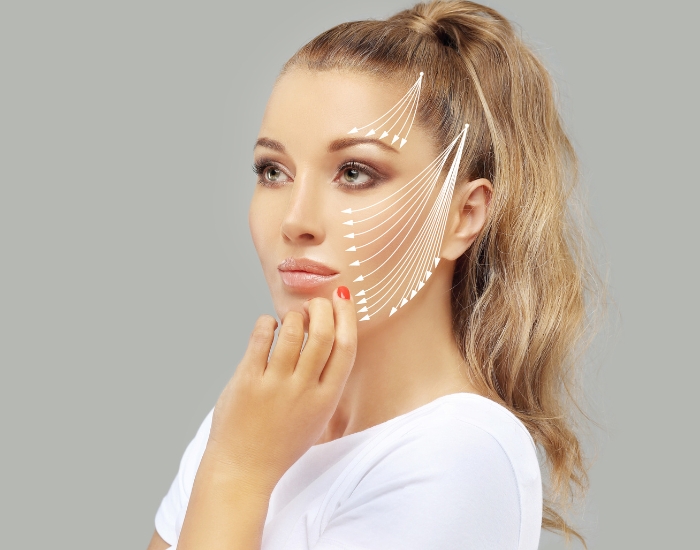
When people say they want a facelift, they don’t always mean they want surgery. Often, what they really want is to look less tired, soften signs of aging, restore some lost facial volume, or feel that their features look more refreshed without undergoing an operation.
That is where a non-surgical facelift can come into the conversation.
Unlike a traditional facelift, a non-surgical approach does not involve surgically lifting and repositioning facial tissues. Instead, different aesthetic treatments may be used to address specific changes associated with aging, such as wrinkles, volume loss, reduced skin firmness, uneven texture, or loss of facial definition.
There isn’t one treatment that works as a non-surgical facelift for everyone. Botox and other neurotoxins can reduce the appearance of certain expression lines. Dermal fillers can restore volume and provide structural support. Sculptra is a collagen-stimulating injectable designed to gradually improve facial volume. Energy-based treatments can target skin laxity or texture. In some patients, combining carefully selected treatments may provide a more comprehensive result.
The key is understanding what is actually changing in your face. Someone whose main concern is forehead wrinkles needs a different approach from someone whose primary concern is loose skin along the jawline. Treating the wrong problem can lead to disappointing results.
Table of Contents
- What Is a Non-Surgical Facelift?
- What Are the Best Non-Surgical Facelift Treatments?
- Can Botox Create a Non-Surgical Facelift?
- How Do Dermal Fillers Work for Facial Rejuvenation?
- What Is Sculptra and How Does It Compare?
- What Treatments Tighten Loose Facial Skin?
- Can RF Microneedling Help With Facial Aging?
- Who Is a Good Candidate?
- Can Treatments Be Combined?
- What Results Can You Expect?
Important Note
Aging does not happen in just one layer of the face. Over time, changes can occur in the skin, facial fat, collagen, muscle activity, and underlying support. That is why the treatment that worked well for a friend may not be the right choice for you. Understanding whether your main concern is wrinkles, volume loss, skin laxity, or texture can help you avoid chasing a single “miracle” procedure and instead choose an approach that makes sense for your individual face.
What Is a Non-Surgical Facelift?
A non-surgical facelift is a general term for a combination of non-surgical aesthetic treatments used to address visible signs of facial aging without traditional facelift surgery.
It is important to understand that the phrase “non-surgical facelift” does not describe one specific medical procedure. Different clinics may use the term to describe different combinations of injectables, skin-tightening procedures, laser treatments, microneedling, or other aesthetic services.
These treatments can target different aspects of facial aging. For example, Botox may reduce the appearance of dynamic wrinkles caused by repeated muscle movement. Dermal fillers may restore selected areas of lost volume. Collagen-stimulating treatments may gradually improve the appearance of volume and skin quality. Energy-based treatments may be used when skin laxity or texture is a primary concern.
The distinction from a surgical facelift is important. A traditional facelift physically repositions and removes tissues to address significant sagging and laxity. Non-surgical treatments generally provide more subtle changes and do not reproduce the same structural correction.
For someone with mild to moderate signs of aging who wants to avoid surgery or significant downtime, non-surgical options may be worth discussing with a qualified medical professional.
What Are the Best Non-Surgical Facelift Treatments?
There is no single “best” non-surgical facelift treatment. The appropriate option depends on what is causing the aged or tired appearance.
For dynamic wrinkles, a neurotoxin such as Botox may be appropriate. For facial volume loss, dermal fillers may provide a more direct solution. Sculptra works differently by stimulating collagen production over time. For skin laxity, energy-based skin-tightening treatments may be considered. RF microneedling can address selected concerns involving skin texture and firmness.
Other treatments, including laser procedures and chemical peels, may be useful when surface skin quality, pigmentation, or texture is the main concern.
| Treatment | Primary Concern | General Approach |
|---|---|---|
| Botox / Neurotoxins | Dynamic wrinkles | Temporarily reduces targeted muscle activity |
| Dermal Fillers | Volume loss and selected contour concerns | Adds volume or structural support |
| Sculptra | Certain forms of facial volume loss | Stimulates collagen production gradually |
| RF Microneedling | Texture and selected firmness concerns | Uses microneedling and radiofrequency energy |
| Skin Tightening | Mild skin laxity | Uses energy-based technology to address tissue firmness |
The best treatment is therefore not necessarily the most popular procedure. It is the treatment that addresses the specific change you want to improve while fitting your anatomy, medical history, and expectations.
Can Botox Create a Non-Surgical Facelift?
Botox can contribute to facial rejuvenation by temporarily reducing the appearance of certain dynamic wrinkles, but it does not physically lift loose facial tissue like a surgical facelift.
Botox and similar botulinum toxin products work by temporarily reducing activity in specific muscles. This can soften wrinkles that develop from repeated facial movement, such as certain forehead lines, frown lines between the eyebrows, and crow’s feet.
That makes Botox useful for a particular category of facial aging: wrinkles caused or worsened by muscle movement.
It does not replace lost facial volume. If your cheeks have become flatter with age, Botox cannot restore that volume. Likewise, if your primary concern is significant skin laxity along the jawline, Botox may not address the underlying issue.
However, when dynamic wrinkles are one part of a patient’s concerns, a neurotoxin treatment can sometimes be included in a broader facial rejuvenation plan.
Luminous MediSpa offers neurotoxin treatments as part of its injectable aesthetic services.
Does Botox Tighten Loose Skin?
Not in the same way that a skin-tightening treatment does.
Botox changes muscle activity rather than physically tightening lax skin. In certain areas, reducing muscle activity can create a softer or more relaxed appearance, but it should not be presented as a substitute for a procedure designed specifically to address skin laxity.
If loose skin is your main concern, your provider may discuss other options instead of relying on Botox alone.
How Do Dermal Fillers Work for Facial Rejuvenation?
Dermal fillers can restore volume and provide structural support in selected areas, making them useful for certain forms of facial aging.
As the face ages, volume can change in areas such as the cheeks, lips, temples, and other facial regions. These changes can contribute to folds, shadows, or altered facial proportions.
Depending on the filler and treatment area, an appropriately placed injectable may restore some lost volume or improve contour.
For example, cheek filler may restore midface projection. Chin filler may improve the relationship between the chin and other facial features. Certain fillers can also be used for lips or other areas where volume loss or contour is the primary concern.
But fillers should not be thought of as simply “adding volume everywhere.” Too much filler can create an unnatural appearance and may make the face look heavier rather than younger.
A good treatment plan considers the entire face and asks a simple question: What is actually missing?
Can Fillers Lift the Face?
Fillers may create a subtle lifting or support effect in selected situations, particularly when volume loss contributes to changes in facial contour. However, they do not physically reposition facial tissues in the way surgery does.
This distinction matters when setting expectations. Someone with early volume loss may notice a meaningful improvement from carefully placed filler, while someone with substantial sagging may need a different approach.
Luminous MediSpa provides dermal filler and injectable treatments for patients seeking facial rejuvenation and contouring options.
What Is Sculptra and How Does It Compare With Fillers?
Sculptra is an injectable collagen stimulator that works differently from traditional hyaluronic acid dermal fillers.
Rather than primarily providing immediate volume in the same way as a conventional filler, Sculptra contains poly-L-lactic acid and is designed to stimulate the body’s collagen production over time.
This means the treatment approach and timeline are different.
Traditional fillers can provide an immediate volumizing effect, although swelling may temporarily change the appearance. Sculptra is generally associated with a gradual change as collagen production develops over time.
For patients concerned about gradual facial volume loss, this difference can be important when discussing treatment options.
Sculptra is not necessarily better than dermal filler. They simply work differently and may be appropriate for different treatment goals.
Is Sculptra a Liquid Facelift?
The phrase “liquid facelift” is commonly used in aesthetic marketing to describe combinations of injectable treatments used to rejuvenate the face without surgery. It is not a single standardized medical procedure.
A liquid facelift may involve fillers, neurotoxins, collagen-stimulating treatments, or combinations of these depending on the provider and patient’s needs.
Because terminology varies between practices, ask exactly which treatments are included rather than assuming that “liquid facelift” means a particular procedure.
What Treatments Tighten Loose Facial Skin?
Energy-based skin-tightening treatments may be considered for certain patients with mild to moderate skin laxity, although they cannot reproduce the degree of lifting achieved with surgery.
Skin firmness changes as collagen and elastin decline with age. Sun exposure, genetics, weight changes, and other factors can also influence skin laxity.
When the primary issue is loose or less firm skin rather than volume loss, simply adding filler may not address the underlying concern.
That is why modern facial rejuvenation often involves evaluating several components separately: skin quality, volume, muscle activity, and tissue laxity.
Luminous MediSpa offers XERF structural skin tightening as one of its treatment options for patients interested in non-surgical approaches to skin firmness.
What Is XERF Skin Tightening?
XERF is an energy-based treatment designed for structural skin tightening. The technology uses radiofrequency energy to heat targeted tissue with the goal of addressing skin laxity and supporting changes in tissue firmness.
The appropriate treatment settings and expected results depend on the individual patient. A consultation is important to determine whether energy-based skin tightening fits the type and degree of laxity present.
Can RF Microneedling Help With Facial Aging?
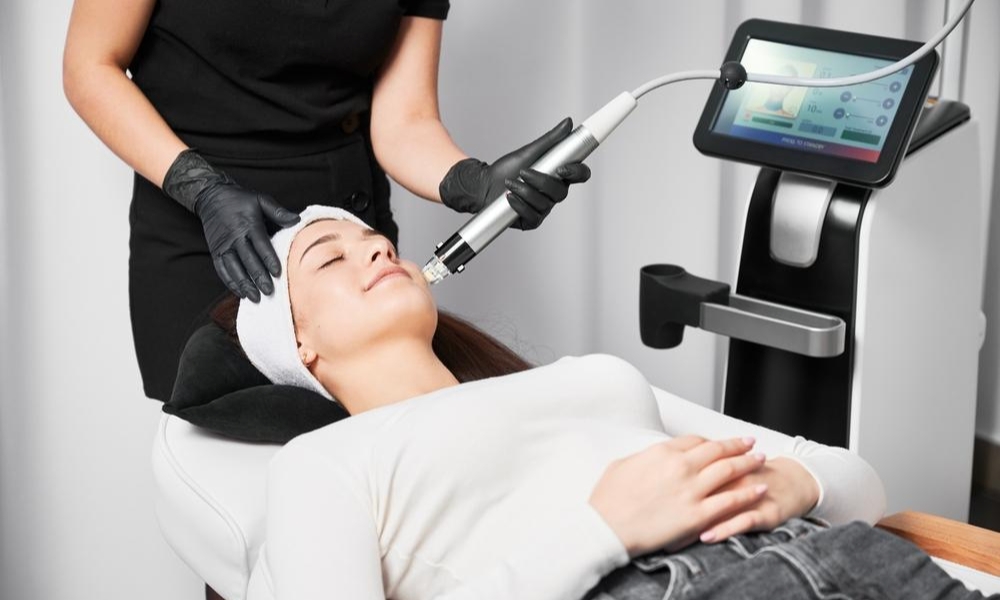
RF microneedling may help address selected concerns involving skin texture, firmness, and collagen remodeling.
Unlike Botox and dermal fillers, RF microneedling does not work by relaxing facial muscles or directly adding injectable volume. It combines controlled microneedling with radiofrequency energy to target the skin and underlying tissue.
Because it addresses a different aspect of facial aging, RF microneedling may sometimes be considered as part of a broader rejuvenation plan.
It may be particularly relevant when a patient’s concerns include skin texture or firmness rather than simply facial volume.
Luminous MediSpa offers RF microneedling with or without PRP.
What About Laser Treatments and Chemical Peels?
Not every sign of facial aging is caused by volume loss or sagging. Sometimes the skin itself is the main concern.
Uneven pigmentation, sun-related changes, rough texture, and dull-looking skin can all affect how youthful or rested the face appears.
In those situations, laser treatments or chemical peels may be considered depending on the specific skin concern, skin type, medical history, and treatment goals.
Luminous MediSpa offers laser toning and chemical peel treatments among its aesthetic services.
These treatments should not be described as replacements for a surgical facelift. Instead, they address different components of facial appearance and may complement other rejuvenation approaches when appropriate.
Who Is a Good Candidate for a Non-Surgical Facelift?
A good candidate for non-surgical facial rejuvenation is generally someone who has a specific concern that can reasonably be addressed with non-surgical treatment and understands that the results will be more subtle than those of surgery.
You may be considering a non-surgical approach because you have started noticing fine lines, reduced facial volume, less defined contours, or mild skin laxity. You may also simply want to look more rested without making a dramatic change to your appearance.
Age by itself does not determine whether someone is a candidate. Two people of the same age can have very different facial structures, skin quality, and patterns of aging.
For one person, dynamic wrinkles may be the biggest concern. For another, the cheeks may have lost volume. Someone else may primarily notice laxity around the lower face. Each situation calls for a different conversation.
What If You Have Significant Sagging?
This is one of the most important questions to address during a consultation.
Non-surgical treatments can improve certain signs of aging, but they have limitations. If there is substantial excess skin or pronounced tissue descent, injectables and energy-based treatments may not provide the degree of lifting that a surgical facelift can achieve.
That does not mean a non-surgical treatment is useless. It simply means expectations need to match what the procedure is designed to accomplish.
A responsible provider should tell you when a treatment is unlikely to give you the result you want rather than recommending additional procedures simply to compensate.
Can Botox, Fillers, Sculptra, and Skin Tightening Be Combined?
Yes, different non-surgical treatments can sometimes be combined because they address different aspects of facial aging. However, combining treatments does not automatically produce a better result.
Think about the face as a collection of interacting structures rather than a single surface. Wrinkles, volume loss, skin laxity, and texture changes are different problems. Treating each one with the same procedure would not make sense.
For example, a treatment plan might address dynamic wrinkles with a neurotoxin, selected volume loss with dermal filler, and skin firmness with an energy-based treatment. Another patient may need only one of those options.
In some cases, treatments may be performed during separate appointments rather than all at once. Staging procedures can allow the provider to assess the initial result before deciding whether anything else is necessary.
Is a Combination Treatment Better Than One Treatment?
Not necessarily.
The goal should be appropriate treatment, not the largest treatment plan.
If your only concern is forehead lines, adding cheek filler or a skin-tightening procedure simply because it is part of a “full facelift package” may not make sense. Conversely, if you have several unrelated signs of aging, treating only one concern may leave you feeling that the overall result is incomplete.
The best approach is individualized and proportional to the concerns being treated.
Important Note
It is completely understandable to feel uncertain when several treatments are advertised as the “best” non-surgical facelift. The truth is that some causes of facial aging are mild and can respond well to conservative treatment, while others require a different approach. You do not need to diagnose yourself from photographs or online before-and-after galleries. A proper evaluation can help separate wrinkles, volume loss, skin laxity, and texture concerns so you can make a more informed decision.
What Should You Expect During a Non-Surgical Facelift Consultation?
A good consultation should begin with your concerns rather than with a predetermined procedure.
You may be asked what you have noticed, when the change became noticeable, whether you have had previous aesthetic treatments, and what kind of result you hope to achieve.
The provider may then examine your face at rest and while making facial expressions. This can help distinguish dynamic wrinkles from changes in volume or skin laxity.
Your medical history is also important. Tell the provider about medications, allergies, previous injectable treatments, skin conditions, and any previous reactions to aesthetic procedures.
You should also be given an opportunity to discuss realistic outcomes, potential side effects, recovery, treatment alternatives, and whether more than one procedure is actually necessary.
Why Is Facial Assessment So Important?
A photograph can make one feature look disproportionately important, especially when lighting, camera angle, and facial expression change the way shadows appear.
An in-person assessment allows a trained professional to consider your facial anatomy in three dimensions and observe how your features move.
This is particularly relevant when deciding between Botox and fillers. A line that appears on your forehead when you raise your eyebrows is fundamentally different from volume loss in the cheek.
Those concerns require different treatment strategies.
What Results Can You Expect From a Non-Surgical Facelift?
Results vary considerably depending on the treatment used, the condition being addressed, the patient’s anatomy, and the degree of aging present.
In general, non-surgical facial rejuvenation aims for improvement rather than a complete transformation.
Someone receiving Botox may notice softer expression lines as the treatment takes effect. Someone receiving dermal filler may notice changes in facial volume or contour. With collagen-stimulating treatments such as Sculptra, changes develop more gradually. Energy-based procedures may require a series of treatments depending on the technology and the condition being addressed.
The timing of results is therefore not identical across procedures.
Will You Look Different Immediately?
That depends on the treatment.
Some injectable procedures can produce an immediate change in volume, although temporary swelling can make the early appearance different from the eventual result. Other treatments are designed to produce gradual changes over time.
This is one reason not to judge an aesthetic treatment solely by what you see immediately after an appointment.
Your provider should explain the expected timeline, including what is normal during the early recovery period and when the final or more stable result can reasonably be assessed.
How Long Do Non-Surgical Facelift Results Last?
There is no universal timeline because each treatment works differently.
Botox results are temporary because the effect on targeted muscle activity gradually wears off. Dermal fillers also have varying durations depending on the product, location, metabolism, and other factors. Collagen-stimulating treatments have a different mechanism and timeline. Results from skin-tightening procedures can also vary based on the technology and individual response.
Maintenance should therefore be based on the actual treatment rather than the general phrase “non-surgical facelift.”
If someone tells you that a non-surgical facelift will last for a specific number of years without explaining which procedures are being used, ask for more detail.
Do You Need Maintenance Treatments?
Many non-surgical aesthetic treatments are temporary or require more than one session to achieve or maintain the desired result.
Maintenance is not necessarily a sign that a treatment failed. It reflects the fact that the body’s tissues continue to age and some treatment effects gradually diminish.
A reasonable maintenance plan should be discussed only after the initial treatment has been evaluated.
Are Non-Surgical Facelift Treatments Safe?
Non-surgical does not mean risk-free.
Injectable and energy-based aesthetic treatments can cause temporary effects such as redness, swelling, tenderness, bruising, or sensitivity depending on the procedure.
Injectable treatments also have uncommon but potentially serious complications. Dermal fillers, for example, can rarely enter or affect a blood vessel and cause vascular complications. This is why provider experience, knowledge of facial anatomy, appropriate product selection, and a clear plan for managing complications matter.
Energy-based procedures also have procedure-specific risks, which can vary depending on the device, settings, skin type, and treatment technique.
Before treatment, ask what side effects are expected, what warning signs require medical attention, and who you should contact if something does not seem right.
When Should You Avoid or Delay a Non-Surgical Facelift?
Aesthetic treatment is not always something that should happen immediately.
If you have an active skin infection, unexplained skin changes, or another condition affecting the proposed treatment area, your provider may recommend waiting until the issue has been evaluated or resolved.
Pregnancy, breastfeeding, medications, allergies, previous reactions, and certain medical conditions may also affect whether a particular procedure is appropriate. These factors vary by treatment, so your provider should review your individual circumstances rather than relying on a general checklist.
You should also consider postponing treatment if you are feeling pressured or expecting a procedure to completely change your appearance.
Cosmetic treatments tend to produce better experiences when expectations are realistic and the decision is made voluntarily.
How Can You Make a Non-Surgical Facelift Look Natural?
One of the biggest concerns people have is looking “overdone.”
A natural-looking result usually starts with restraint. Facial rejuvenation does not necessarily mean eliminating every line or adding volume to every area that can be treated.
Preserving facial movement and respecting the person’s existing anatomy can be just as important as the procedure itself.
For example, filling every hollow may create an appearance that does not match the patient’s natural facial structure. Likewise, treating every wrinkle with a neurotoxin may not be necessary.
The goal should be appropriate correction while preserving the characteristics that make your face recognizable as your own.
Why Is “More” Not Always Better?
Facial features exist in proportion to one another. Adding volume to one area can change how another area appears.
This is why experienced injectors often evaluate the full face before recommending treatment rather than focusing only on the feature that initially bothers the patient.
Sometimes a small correction in one area can make a larger difference in overall balance than multiple aggressive treatments.
What Is the Difference Between a Non-Surgical Facelift and a Surgical Facelift?
The most important difference is how the treatments address aging tissue.
A surgical facelift involves an operation that can reposition and, when appropriate, remove excess tissue. It is designed to address more significant changes in facial and neck laxity.
A non-surgical facelift uses treatments that work on specific aspects of facial aging without surgically repositioning the tissues.
| Factor | Non-Surgical Approach | Surgical Facelift |
|---|---|---|
| Procedure | Injectables and/or non-surgical devices | Surgery |
| Primary Uses | Wrinkles, selected volume loss, skin quality, and mild laxity | More significant skin and tissue laxity |
| Downtime | Generally less than surgery, depending on treatment | Longer recovery is expected |
| Degree of Change | Usually more subtle | Can provide more substantial structural correction |
Neither option is automatically better. The appropriate choice depends on the degree of aging, the patient’s goals, medical considerations, tolerance for surgery and recovery, and the results they realistically expect.
What Is a Liquid Facelift?
A liquid facelift generally refers to a combination of injectable treatments used to create a more rejuvenated appearance without surgery.
The exact meaning can differ between providers. One treatment plan may use Botox and dermal fillers, while another may include a collagen-stimulating injectable or other aesthetic procedures.
Because “liquid facelift” is not a single standardized procedure, ask what specific products and treatments are being proposed.
This terminology can be useful when describing a multi-area injectable treatment plan, but the individual components matter much more than the name.
What Should You Consider Before Choosing a Non-Surgical Facelift?
Start with the problem rather than the procedure.
Ask yourself what you actually want to change. Is it forehead or frown lines? Loss of cheek volume? Less defined facial contours? Skin texture? Mild laxity around the lower face?
Then discuss that concern with a qualified medical provider.
You should understand which treatment is being recommended, why it is appropriate, what results are realistic, how long those results may last, what recovery is involved, and what alternatives exist.
It is also reasonable to ask what the provider would recommend if you chose not to have treatment at all. A trustworthy consultation should allow room for that answer.
Non-Surgical Facelift Treatments in Katy, TX
For patients in Katy and nearby communities, Luminous MediSpa provides several aesthetic services that may be considered as part of an individualized facial rejuvenation plan.
The practice offers neurotoxin treatments, dermal fillers and injectables, RF microneedling, and XERF structural skin tightening, along with other skin rejuvenation services.
These treatments are not interchangeable, and suitability depends on the individual. A consultation can help determine whether the primary concern is related to wrinkles, volume loss, skin quality, or laxity.
Luminous MediSpa is located at 410 W Grand Pkwy S, Suite 310, Katy, TX 77494, and its medical team includes Dr. Humera Naqvi, MD, a board-certified physician.
When Should You Worry About Facial Aging?
Facial aging itself is not a medical emergency, but sudden or unexplained changes in facial appearance should not automatically be assumed to be normal aging.
If you notice a sudden change in facial symmetry, new swelling, persistent skin changes, unexplained lumps, or other unusual symptoms, medical evaluation may be appropriate before considering a cosmetic procedure.
Likewise, if you are considering injectable treatment and have a history of significant reactions or a medical condition that may affect treatment, discuss it with your healthcare provider beforehand.
Cosmetic treatment should begin with a clear understanding of your health and the condition being treated.
Frequently Asked Questions About Non-Surgical Facelift Treatments
What is the best non-surgical facelift?
There is no single best treatment. Botox, dermal fillers, Sculptra, RF microneedling, and skin-tightening procedures address different aspects of facial aging. The appropriate option depends on the patient’s specific concerns and anatomy.
Can Botox give you a facelift?
Botox can soften certain dynamic wrinkles and contribute to a more refreshed appearance, but it does not surgically lift or reposition loose facial tissue.
Are fillers better than Botox for a non-surgical facelift?
Neither is universally better. Botox primarily targets muscle activity and dynamic wrinkles, while dermal fillers can address selected forms of volume loss and contour changes.
Is Sculptra better than dermal filler?
Sculptra and dermal fillers work differently. Sculptra is a collagen stimulator designed to produce gradual changes, while many dermal fillers provide more direct volume. The appropriate choice depends on the treatment goal.
Can a non-surgical facelift tighten loose skin?
Some energy-based treatments may improve the appearance of mild skin laxity. However, non-surgical treatments generally cannot provide the same degree of tissue lifting as surgical facelift procedures.
What is a liquid facelift?
A liquid facelift is a general term for a combination of injectable treatments used to rejuvenate facial appearance without surgery. The exact combination varies between providers.
How long does a non-surgical facelift last?
There is no single duration. Longevity depends on which treatments are used, the products selected, the treatment areas, and individual factors.
Does a non-surgical facelift hurt?
Comfort varies by treatment and individual sensitivity. Some procedures involve injections or microneedling and may cause temporary discomfort, while providers may use comfort measures to make treatment more tolerable.
Can you combine Botox and fillers?
Botox and dermal fillers can sometimes be used in the same overall facial rejuvenation plan because they address different concerns. A qualified provider should determine whether combining them is appropriate.
How soon do non-surgical facelift results appear?
The timeline varies. Some treatments produce an immediate volumizing effect, while others work gradually. Botox typically develops its effect over time, and collagen-stimulating or skin-tightening treatments may also require patience before changes become apparent.
Is a non-surgical facelift safer than surgery?
Non-surgical procedures generally avoid the risks associated with an operation and usually involve less recovery, but they are not risk-free. Injectable and energy-based procedures have their own potential complications.
Final Thoughts: Which Non-Surgical Facelift Treatment Is Best?
The best non-surgical facelift treatment is not necessarily the newest, most expensive, or most heavily advertised procedure. It is the one that appropriately addresses the specific changes you want to improve.
Botox can be useful for dynamic wrinkles. Dermal fillers can restore selected areas of lost volume and improve contour. Sculptra can stimulate collagen production gradually. RF microneedling and energy-based skin-tightening treatments can address selected concerns involving skin quality and firmness.
For some people, one treatment may be enough. Others may benefit from a carefully staged combination. And for someone with significant skin and tissue laxity, surgery may ultimately provide a more appropriate result.
The goal of facial rejuvenation should not be to make every sign of aging disappear. A more realistic goal is to create a refreshed appearance while respecting your natural facial structure.
If you are considering a non-surgical facelift in Katy, TX, a consultation with a qualified medical professional can help you understand which options are appropriate for your concerns and what results you can realistically expect.
Explore Facial Rejuvenation Options in Katy
Luminous MediSpa offers several non-surgical aesthetic treatments, including neurotoxins, dermal fillers, RF microneedling, and structural skin tightening. Treatment selection should be based on your individual concerns, facial anatomy, and medical history.
Medical Disclaimer
This article is for general educational purposes only and does not provide medical advice, diagnosis, or treatment. Non-surgical aesthetic procedures have potential risks and may not be appropriate for everyone. A qualified healthcare professional should evaluate your medical history, skin, facial anatomy, and treatment goals before recommending any cosmetic procedure. Individual results vary.