


Have you ever looked at your face and felt that one feature seemed slightly out of proportion, but you couldn’t quite explain why? Maybe your chin appears a little recessed in photographs. Perhaps your cheeks seem flatter than they used to, or your jawline doesn’t look as defined as you’d like. Sometimes the concern isn’t a single wrinkle or one isolated feature. It’s the way several facial features relate to one another.
That’s where facial balancing with fillers comes into consideration.
Facial balancing is an aesthetic approach that focuses on proportions rather than simply adding volume. Depending on your facial structure and goals, carefully placed dermal filler may be used in areas such as the cheeks, chin, or jawline to create a more harmonious relationship between different features.
The important word is balancing. The goal isn’t necessarily to make one feature larger or more prominent. In many cases, the goal is to make the face look more proportionate while preserving the characteristics that make it uniquely yours.
That sounds simple, but facial anatomy is anything but simple. Bone structure, soft tissue, fat distribution, muscle activity, skin quality, and natural asymmetry all influence how your face looks from different angles. A treatment that works beautifully for one person may be inappropriate for someone with a different facial structure.
Table of Contents
- What Is Facial Balancing With Fillers?
- How Does Facial Balancing Work?
- Which Areas Can Be Treated With Fillers?
- How Does Cheek Filler Affect Facial Balance?
- What Can Chin Filler Do?
- What Is Jawline Filler Used For?
- Who Is a Good Candidate?
- What Results Can You Expect?
- What Are the Risks?
- Facial Balancing With Fillers in Katy, TX
- Frequently Asked Questions
- Medical Disclaimer
Important Note
Facial asymmetry and changing facial proportions are completely normal. You do not need to have a perfectly symmetrical face to look balanced or attractive. If you’re considering filler because something about your facial proportions has been bothering you, the most useful first step is understanding what is actually creating that imbalance. Sometimes a small amount of carefully placed filler can make a meaningful difference; other times, filler may not be the right solution at all.
What Is Facial Balancing With Fillers?
Facial balancing with fillers is an individualized cosmetic treatment approach that uses dermal filler in selected areas to improve the visual relationship between facial features.
Rather than focusing on one isolated feature, the provider evaluates the face as a whole. The cheeks, chin, jawline, lips, nose, forehead, and surrounding structures can all influence how facial proportions are perceived.
For example, a person with a naturally smaller or recessed chin may feel that the nose appears more prominent, even though there is nothing unusual about the nose itself. In some cases, adding carefully planned chin projection may create a more balanced profile.
Similarly, restoring cheek volume can sometimes improve the relationship between the midface and lower face. Jawline filler may help define the lower face in appropriately selected patients.
The treatment isn’t about following one ideal facial shape. There is no single proportion that every person should have. Instead, facial balancing aims to work with your existing anatomy.
How Does Facial Balancing Work?
Facial balancing begins with an assessment rather than a predetermined list of injections.
A provider may evaluate your face from the front, side, and different angles. They may look at the relationship between your forehead, nose, lips, chin, cheeks, and jawline. They may also consider facial movement and how the soft tissues change when you smile or speak.
This broader assessment is important because what appears to be a problem in one area may actually be influenced by another feature.
Imagine someone who feels that their lower face looks too long. Adding more volume to the chin without understanding the overall proportions could potentially make that concern more noticeable. A comprehensive assessment helps the provider decide whether the chin should actually be treated and, if so, how much correction is appropriate.
The same principle applies to cheeks and the jawline. More volume does not automatically create better balance.
In many cases, facial balancing involves relatively conservative treatment. The provider may recommend addressing one area first, allowing the result to settle, and then deciding whether another area needs adjustment.
Which Areas Can Be Treated With Fillers?
Dermal fillers can be used in several areas of the face, depending on the product and the patient’s anatomy. For facial balancing, commonly considered areas include the cheeks, chin, and jawline.
These areas can influence facial proportions in different ways.
| Treatment Area | Potential Goal | What It May Influence |
|---|---|---|
| Cheeks | Restore or create midface volume | Cheek projection and transition between the midface and lower face |
| Chin | Improve projection or proportion | Profile balance and relationship between the chin, lips, and nose |
| Jawline | Improve definition | Lower-face contour and jawline visibility |
These treatments may sometimes be used individually or as part of a broader plan. However, not everyone needs filler in multiple areas. A thoughtful treatment plan should explain why each area is being considered.
How Does Cheek Filler Affect Facial Balance?
Cheek filler can restore or add volume to the midface and may improve the relationship between the cheeks and surrounding facial features.
The cheeks naturally provide structure to the middle portion of the face. Over time, changes in facial fat, collagen, skin elasticity, and underlying support can make the cheeks appear flatter or less defined.
For some patients, this loss of volume changes more than just the cheeks. The lower eyelid-to-cheek transition may become more noticeable, and certain folds may appear deeper.
Carefully placed cheek filler may help restore some of the lost projection. The goal isn’t necessarily to create prominent cheekbones. Instead, the provider may aim for a smoother, more proportionate transition.
Cheek filler can also be used in younger adults who naturally have less midface projection and want subtle contouring. Again, the treatment should be based on anatomy rather than age alone.
Can Cheek Filler Make Your Face Look Wider?
It can, depending on where and how much product is used. Cheek filler placement influences the direction in which volume is added.
For example, adding volume more laterally can create a different visual effect from adding projection higher on the cheek. This is why injection placement matters just as much as the amount of filler.
If your goal is facial balancing rather than simply larger cheeks, communicate that clearly during your consultation.
What Can Chin Filler Do?
Chin filler can add projection, improve chin shape, and in some patients create a more balanced relationship between the chin and other facial features.
The chin plays a surprisingly important role in facial proportions. A chin that sits farther back can influence how the profile looks and may make the nose appear more prominent by comparison.
Adding a carefully selected amount of filler can sometimes create more forward projection without surgery.
Chin filler may also be used to improve the shape or symmetry of the chin. For example, subtle correction may help address minor asymmetry or create a smoother contour.
However, chin filler has limitations. It cannot replicate every structural change that would be possible with a surgical procedure such as genioplasty or chin implant surgery.
For someone with significant skeletal retrusion, a surgical consultation may be more appropriate. A responsible aesthetic provider should explain when injectable treatment is unlikely to achieve the desired result.
Can Chin Filler Make Your Face Look More Balanced?
In appropriately selected patients, yes.
The chin is closely related visually to the lips and nose. Small changes in chin projection can therefore influence how the entire lower face appears from the side.
This does not mean that everyone with a smaller chin needs filler. Facial proportions vary naturally, and a softer or less prominent chin can be completely normal.
If you feel your profile lacks balance, the most useful approach is to have the entire profile evaluated rather than deciding that the chin itself is the problem.
A provider may assess the relationship between the forehead, nose, lips, and chin before recommending any treatment.

What Is Jawline Filler Used For?
Jawline filler may be used to add definition or structure along selected portions of the jawline in appropriate patients.
A defined jawline can be influenced by bone structure, muscle, fat distribution, skin elasticity, and genetics. Filler can address some aspects of contour but cannot change every underlying factor.
For example, someone with naturally subtle jawline definition may benefit from carefully placed filler if the primary issue is a lack of structural projection. On the other hand, if significant skin laxity or excess tissue is the main concern, filler alone may have limited benefits.
Jawline filler also needs to be approached carefully because the lower face contains important anatomical structures. The provider needs a detailed understanding of facial anatomy and appropriate injection technique.
Does Jawline Filler Change Your Face Shape?
It can influence the appearance of the lower face, but the degree of change depends on the amount and location of filler used.
A conservative treatment may create subtle definition, while larger amounts can create a more noticeable contour.
If facial balancing is the goal, the objective should not simply be to create the sharpest jawline possible. The jawline needs to fit the rest of the face.
Why Is Facial Balance More Important Than Facial Symmetry?
Perfect facial symmetry does not exist. Even faces generally perceived as highly attractive contain natural differences between the left and right sides.
Trying to make both sides completely identical can therefore create an unnatural goal.
Facial balance is different. It refers more broadly to how features relate to one another.
For example, a person can have slightly different cheek heights on each side and still have harmonious facial proportions. Similarly, a small amount of chin asymmetry may be completely normal.
When fillers are used for facial balancing, the goal is generally to improve proportion while respecting natural individuality.
Who Is a Good Candidate for Facial Balancing With Fillers?
A good candidate is generally someone with a specific aesthetic concern that can reasonably be addressed through injectable treatment and who understands the limitations of fillers.
You may be interested in facial balancing if you notice:
- Loss of cheek volume
- A chin that appears recessed or lacks projection
- Subtle lower-face asymmetry
- Limited jawline definition
- Changes in facial proportions associated with aging
- A desire for subtle non-surgical contouring
However, the presence of one of these concerns does not automatically mean filler is appropriate.
Your provider should evaluate your facial structure, skin quality, medical history, previous cosmetic procedures, and expectations before recommending treatment.
What If You Want a Very Subtle Result?
Tell your provider.
It can be surprisingly difficult for an injector to understand exactly what a patient means by “natural” unless the patient explains what they want to avoid.
You might say that you want your jawline to look slightly more defined but don’t want a dramatically sharper appearance. Or you may want your chin to project a little more in profile without changing your face from the front.
Specific conversations like these can help your provider understand your expectations.
Facial balancing often works best when the treatment is approached conservatively. A small correction can sometimes influence the appearance of surrounding features without requiring multiple syringes or extensive treatment.
How Does a Facial Balancing Consultation Work?
A facial balancing consultation should feel more like an assessment than a sales appointment. Before any filler is placed, the provider should understand what you notice about your face, what you would like to change, and what you want to preserve.
You may be asked what bothers you most when you look in the mirror or at photographs. Some patients focus on their profile, while others notice their cheeks or jawline from the front. These details matter because facial proportions can look very different depending on the viewing angle.
Your provider may assess facial structure, soft-tissue volume, skin quality, symmetry, and the relationship between features. They may also discuss your previous aesthetic treatments and any relevant medical history.
Photographs may be taken as part of the assessment. Standardized photographs can help document your starting point and provide a more objective way to evaluate changes later.
Most importantly, you should have an opportunity to discuss alternatives. A consultation should not assume that filler is automatically the answer.
How Much Filler Is Needed for Facial Balancing?
There is no universal amount of filler required for facial balancing. The amount depends on the area being treated, the degree of volume loss or structural correction desired, the filler selected, and the patient’s anatomy.
Some patients may need only a small amount in one area. Others may benefit from staged treatment involving more than one facial region.
Using more filler does not necessarily create better facial balance. In fact, excessive volume can make a previously subtle imbalance more noticeable.
A conservative approach can also make it easier to evaluate how the face responds. If additional correction is appropriate, it can be discussed during a follow-up rather than trying to accomplish everything during one appointment.
Why Is Staged Treatment Sometimes Better?
Facial filler can produce swelling immediately after treatment, which can temporarily make the face look different from the eventual result. Allowing the treated area to settle gives both the patient and provider a better opportunity to evaluate the outcome.
Staged treatment may also reduce the temptation to overcorrect. Once the first treatment has settled, it becomes easier to determine whether another area actually needs attention.
Important Note
It’s completely understandable to compare your face with photographs online and wonder whether you need filler in several areas. Try not to diagnose your own facial proportions from a social media image. Lighting, camera lenses, angles, filters, facial expression, and editing can dramatically change how a face appears. Some concerns can be improved with conservative filler, while others may respond better to skincare, another aesthetic treatment, or no treatment at all. A professional assessment is the safest way to determine what actually makes sense for your anatomy.
What Results Can You Expect From Facial Balancing Fillers?
The results depend on the areas treated and the reason for treatment. Some patients notice more cheek projection, improved chin proportion, or greater definition along the jawline. Others may simply feel that their features look more harmonious without being able to identify exactly what changed.
That second outcome can actually be a sign of a well-planned treatment. Facial balancing is not necessarily about creating a dramatic transformation.
For example, a patient with mild chin retrusion may notice that their side profile looks more proportionate after treatment. Someone with midface volume loss may notice that the transition between the cheeks and lower face appears smoother.
Results also depend on expectations. Fillers can provide structural support and volume, but they cannot recreate bone or permanently stop the aging process.
How Soon Will You See Facial Balancing Results?
Some effects from dermal filler may be visible immediately because the product provides volume at the time of injection. However, early swelling can temporarily obscure the final appearance.
It is therefore important to give the treated area time to settle before deciding whether the treatment has produced the desired result.
Your provider will explain when a follow-up assessment is appropriate. If you notice mild swelling or bruising during the early recovery period, this does not necessarily mean the final result will look that way.
If you experience unexpected or concerning symptoms, however, do not simply wait for the routine follow-up. Contact your provider for guidance.
How Long Does Facial Balancing With Fillers Last?
Dermal fillers are not permanent. How long the results remain visible depends on the product, treatment area, amount used, individual metabolism, facial movement, and other factors.
Some areas may appear to maintain filler longer than others. A patient’s lifestyle and the type of filler selected can also influence longevity.
Because there is so much individual variation, it is better to think of filler results as temporary rather than expecting an exact expiration date.
Maintenance treatment, if desired, should be based on how the area looks and your provider’s assessment rather than automatically repeating injections at a fixed interval.
What Is the Recovery Like After Facial Fillers?
Most patients can expect some degree of temporary swelling, tenderness, redness, or bruising after injectable treatment. The amount varies according to the treatment area, injection technique, and individual response.
The cheeks, chin, and jawline may each respond differently. Swelling can also make the treated area appear temporarily fuller than expected.
Your provider will provide specific aftercare instructions. Follow those instructions carefully, especially regarding pressure on the treated area, exercise, skincare products, and other activities.
Avoid judging your results based on the first few hours after treatment. Early swelling is not the same thing as the final result.
What Are the Risks of Facial Balancing With Fillers?
Dermal fillers are medical aesthetic treatments and are not completely risk-free.
Common temporary effects may include swelling, bruising, redness, tenderness, and discomfort around the injection sites. Less common aesthetic concerns can include asymmetry, lumps, firmness, or an undesirable contour.
Rare but serious complications can occur when filler affects a blood vessel. Depending on the location and severity, vascular complications can damage surrounding tissue and may require urgent treatment.
This is why provider qualifications, knowledge of facial anatomy, appropriate product selection, sterile technique, and a plan for managing complications all matter.
Do not choose an injector based solely on a low price or a social media promotion. The safest treatment plan is one that begins with an appropriate medical assessment.
Can Facial Fillers Correct Facial Asymmetry?
Fillers can sometimes improve minor differences between the two sides of the face, but they cannot guarantee perfect symmetry.
Natural asymmetry is common. One cheek may be slightly fuller, one side of the jaw may have a different contour, or the chin may sit slightly differently from one side to the other.
A provider may use filler strategically to reduce the visual effect of a mild asymmetry. However, trying to make both sides completely identical can lead to excessive treatment.
The goal should generally be improved harmony rather than mathematical symmetry.
Can Facial Balancing Make Your Face Look Slimmer?
Sometimes facial contouring can change how the shape of the face is perceived, but fillers do not literally remove facial fat.
Strategic cheek or jawline treatment may create additional definition that changes the visual relationship between areas of the face. However, adding too much volume can have the opposite effect and make an area look fuller.
If facial fullness is primarily caused by fat distribution, swelling, or another underlying factor, filler may not be the appropriate solution.
This is another reason why the treatment plan should be based on the underlying anatomy rather than a desired trend or facial shape seen online.
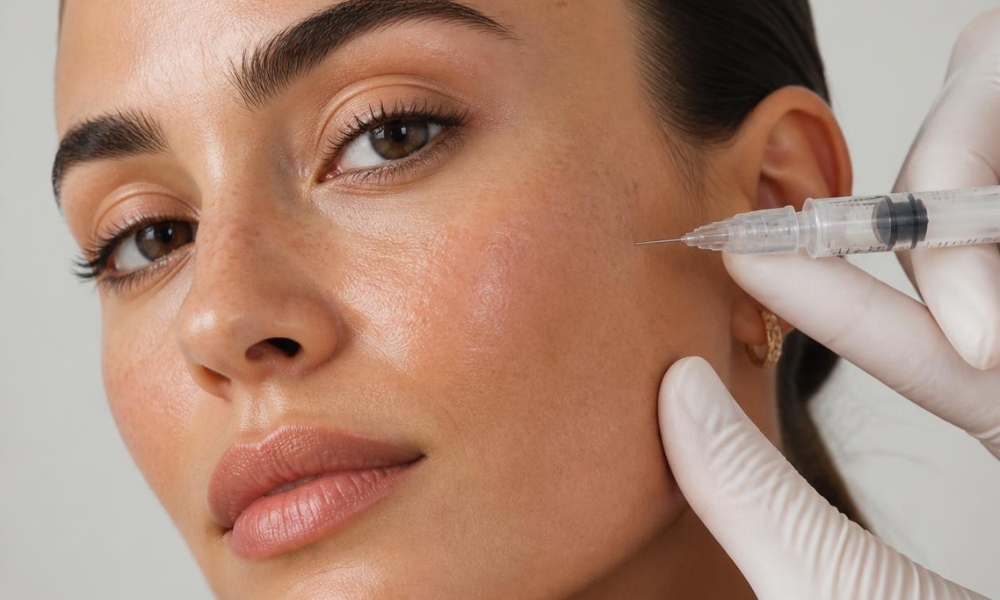
What Is the Difference Between Facial Balancing and Facial Contouring?
The terms are sometimes used interchangeably, but they can describe slightly different goals.
Facial contouring generally focuses on changing or defining the visible shape of a particular facial area. For example, jawline filler may be used to create greater definition.
Facial balancing takes a broader view. Instead of asking only how one feature should look, it considers how the features work together.
A patient might therefore receive cheek or chin filler as part of a facial balancing plan even when they are not specifically looking for more prominent cheeks or a larger chin.
The distinction matters because the most aesthetically pleasing result is not always achieved by maximizing one feature.
Can Facial Balancing Be Done Without Surgery?
Yes. Dermal fillers are one non-surgical option for modifying certain aspects of facial proportions.
Unlike surgical procedures, injectable fillers do not require incisions and generally involve less downtime. However, they also have limitations and do not create permanent structural changes.
For someone seeking a modest adjustment to cheek projection, chin proportion, or jawline definition, filler may be an option to discuss with a qualified provider.
For patients with substantial skeletal differences, significant skin laxity, or other structural concerns, surgery may provide a different level of correction. A consultation can help clarify the difference between what injectables can reasonably accomplish and what requires another approach.
Can Botox and Fillers Be Used Together?
Botulinum toxin products and dermal fillers work differently, so they may sometimes be included in the same broader facial rejuvenation plan.
Fillers primarily provide volume or structural support. Botulinum toxin works by temporarily reducing activity in targeted muscles.
For example, a patient may have volume-related changes in one part of the face and expression lines related to muscle activity in another. Treating each concern requires a different strategy.
However, combining treatments should be based on an individualized assessment rather than a standard package of procedures.
What Should You Consider Before Choosing Facial Balancing Fillers?
Start by identifying the actual concern. Is it your profile, cheek volume, jawline definition, facial asymmetry, or a general feeling that your features don’t look proportionate?
Next, consider whether the concern is structural or related to another factor such as skin laxity or volume loss.
You should also consider your expectations. If you want a dramatic transformation, injectable fillers may not be capable of producing the result you have in mind. If you want a subtle adjustment, conservative filler may be more appropriate.
Finally, consider the provider. Experience with facial anatomy and injectable treatments is especially important when multiple areas are being considered.
Facial Balancing With Fillers in Katy, TX
If you’re researching facial balancing fillers in Katy, TX, a consultation can help you determine whether dermal filler is appropriate for your specific facial proportions.
Luminous MediSpa in Katy provides aesthetic services including dermal filler and injectable treatments. The practice is led by Dr. Humera Naqvi, MD, a board-certified physician, together with an aesthetics team.
Depending on your concerns, a consultation may include discussion of cheek filler, chin filler, jawline contouring, and other facial rejuvenation options. The goal is to determine which approach fits your anatomy and desired outcome rather than assuming that every patient needs the same treatment.
Luminous MediSpa serves patients in Katy and surrounding communities, making it an option for people looking into dermal fillers in Katy and non-surgical facial contouring in the area.
When Should You Reconsider Facial Balancing With Fillers?
Not every concern about facial proportions should be treated with filler. Sometimes the most appropriate decision is to wait, choose another treatment, or decide that no procedure is necessary.
If you are feeling pressured to change multiple features because of social media trends, heavily edited photographs, or comments from other people, take a step back before scheduling an injectable treatment. A cosmetic procedure should be something you choose for yourself, with realistic expectations.
You should also reconsider filler if a provider recommends treatment without examining your facial anatomy or dismisses your questions about risks and alternatives.
Another warning sign is a promise of perfection. Facial fillers cannot guarantee perfect symmetry, a permanently defined jawline, or a specific appearance that will look identical from every angle.
A thoughtful treatment plan should explain both what filler can do and what it cannot do.
When Should You Seek Medical Attention After Fillers?
Temporary swelling, bruising, redness, and tenderness can occur after dermal filler. However, certain symptoms require prompt medical attention.
Severe or increasing pain, unusual skin discoloration, significant blanching, changes in skin temperature, or sudden vision changes are not symptoms to simply watch at home.
Rare vascular complications can affect blood flow to tissue, and complications involving blood vessels near the eye can potentially affect vision. If you experience sudden vision changes after an injectable procedure, seek immediate medical evaluation.
Do not attempt to massage, squeeze, puncture, or otherwise manipulate the treated area to correct a concerning symptom. Contact your provider or seek urgent medical care based on the severity of the problem.
How Do You Maintain Facial Balancing Results?
Dermal fillers gradually change over time as the body processes the product. Maintenance is therefore different from permanent correction.
Some patients choose to have periodic evaluations to determine whether the original result is still present. Others prefer to wait until the effect has noticeably diminished before considering another treatment.
There is no requirement to continually replace filler simply because a certain amount of time has passed. Maintenance should be based on your preferences, the appearance of the treated area, and your provider’s assessment.
Healthy skincare habits can also support the overall appearance of the skin. Sun protection, appropriate hydration, and a skincare routine suited to your skin type can help address concerns that fillers do not directly treat.
Can Skincare Replace Facial Balancing Fillers?
Skincare and dermal fillers serve different purposes.
Skincare can support the health and appearance of the skin by addressing concerns such as dryness, uneven texture, and certain forms of pigmentation. It cannot, however, reproduce the structural volume provided by a dermal filler.
If the concern is primarily a recessed chin, reduced cheek projection, or lack of jawline definition caused by facial structure, a topical product will not create the same type of change.
On the other hand, if your primary concern is skin texture or pigmentation, filler may not be the treatment you need.
Sometimes the most effective facial rejuvenation plan combines appropriate skincare with carefully selected procedures.
How Is Facial Balancing Different for Men and Women?
Facial anatomy varies significantly from person to person, so treatment should never be based solely on gender.
There are, however, general structural differences that may influence aesthetic goals. For example, some men naturally have stronger jaw and chin projection, while some women may have different patterns of cheek or lower-face contours.
These are broad anatomical observations, not rules. Individual variation is far more important than a gender-based template.
A qualified provider should assess your actual facial structure rather than trying to make your face fit a predetermined masculine or feminine ideal.
Is Facial Balancing Suitable for Older Adults?
Age alone does not determine whether someone can receive dermal filler.
As people age, changes in collagen, elastin, fat distribution, bone structure, and skin elasticity can alter facial proportions. Some patients may use fillers to address selected areas of volume loss, while others may benefit more from treatments directed at skin quality or laxity.
The important consideration is whether filler can reasonably address the specific concern.
For example, adding significant filler to compensate for substantial skin laxity may not produce the desired result. A provider should discuss alternatives when appropriate.
What Are the Most Common Mistakes People Make With Facial Fillers?
One common mistake is treating individual facial features independently. Someone may see a less defined jawline and immediately decide they need jawline filler without considering whether the issue is actually related to skin laxity, facial fullness, or another structural factor.
Another mistake is assuming that more filler means a better result. Excessive volume can change facial proportions in ways that were never intended.
Choosing an injector based entirely on price is another concern. Injectable treatments require knowledge of anatomy, appropriate product selection, and the ability to recognize complications.
Finally, comparing your face with highly edited photographs can create unrealistic expectations. A treatment should be planned around your real face, not an altered image.
How Can You Prepare for a Facial Filler Consultation?
Think about what you actually want to change before your appointment. Rather than arriving with a list of specific syringes or treatments, describe the concern you see.
For example, you might say, “I feel like my chin looks slightly recessed from the side,” or “I want more definition around my jawline but don’t want my face to look dramatically different.”
Tell the provider about previous filler treatments and any relevant medical history. You should also disclose medications, supplements, allergies, and previous reactions to injectable treatments.
Bring questions about the product, treatment technique, expected longevity, recovery, risks, and alternatives.
A good consultation should leave you feeling informed rather than pressured to book immediately.
What Questions Should You Ask Before Facial Balancing With Fillers?
- What is causing the imbalance I am noticing?
- Which facial areas would you recommend treating?
- Why do you recommend those areas?
- Would treating one area first be better?
- Which filler would you use and why?
- How much change should I realistically expect?
- What are the common side effects?
- What serious complications should I know about?
- How long should the results last?
- What happens if I do not like the result?
- Are there non-injectable alternatives I should consider?
These questions can help you understand the treatment rather than simply deciding whether you want filler.
Frequently Asked Questions About Facial Balancing With Fillers
What is facial balancing with fillers?
Facial balancing with fillers is an individualized approach that uses dermal filler in selected areas to improve the relationship between facial features. Common treatment areas include the cheeks, chin, and jawline.
What is the best filler for facial balancing?
There is no single best filler for every patient. The appropriate product depends on the treatment area, desired correction, facial anatomy, skin characteristics, and provider assessment.
Can fillers make my face more symmetrical?
Fillers can sometimes reduce the appearance of mild facial asymmetry, but perfect symmetry is neither realistic nor necessary. Treatment should focus on proportion and harmony rather than making both sides identical.
Can chin filler improve my profile?
Yes. In appropriately selected patients, chin filler can add projection and may improve the visual relationship between the chin, lips, and nose when viewed from the side.
Does jawline filler make your jawline sharper?
Jawline filler can add structure and definition in appropriate patients. The degree of change depends on anatomy, product placement, and the amount of filler used.
Can cheek filler improve facial proportions?
Yes. Cheek filler can restore or add midface volume and may improve the relationship between the cheeks and surrounding facial structures.
Is facial balancing permanent?
No. Dermal fillers are temporary treatments. Their longevity varies based on the product, treatment area, individual metabolism, and other factors.
Can facial balancing be done without surgery?
Yes. Dermal fillers can provide non-surgical changes to selected areas of facial volume and contour. However, fillers have limitations and cannot reproduce every structural change possible with surgery.
How long does facial balancing with fillers take?
The length of an appointment varies depending on the number of areas being evaluated or treated. A consultation is an important part of the process and should not be rushed simply to minimize appointment time.
Are facial fillers safe?
Dermal fillers can be used safely in appropriately selected patients by qualified providers, but they carry potential risks. Common effects include swelling and bruising, while rare vascular complications can be serious.
Can I combine cheek, chin, and jawline fillers?
Some patients may receive filler in more than one area as part of an individualized treatment plan. However, multiple-area treatment is not appropriate for everyone, and a provider should determine whether combined treatment is necessary.
What if I only want a small change?
Tell your provider that you want a conservative result. Facial balancing does not necessarily require substantial volume, and a staged approach may sometimes be appropriate.
Final Thoughts: Is Facial Balancing With Fillers Right for You?
Facial balancing is less about changing your face and more about understanding how your existing features relate to one another.
Cheek filler may help restore midface volume. Chin filler may provide additional projection and improve profile proportions. Jawline filler may create definition in appropriately selected patients. But none of these treatments is automatically appropriate simply because a feature looks different from a popular beauty trend.
The most important part of facial balancing is the assessment that happens before the injection.
A qualified provider should consider your anatomy, expectations, medical history, facial movement, and overall proportions. The resulting treatment plan may involve one area, several areas, another type of aesthetic treatment, or no procedure at all.
If you’re considering facial balancing with fillers in Katy, TX, start with a consultation rather than choosing a specific treatment based solely on an online photograph. The right approach should be conservative, individualized, and focused on creating a result that still looks like you.
Explore Facial Filler Options in Katy
If you’re considering cheek filler, chin filler, jawline filler, or another facial rejuvenation treatment, a professional consultation can help determine which options fit your facial structure and goals.
Medical Disclaimer
This article is provided for general educational purposes and does not constitute medical advice, diagnosis, or treatment. Dermal fillers are medical aesthetic procedures with potential risks and may not be appropriate for everyone. A qualified healthcare professional should evaluate your anatomy, medical history, concerns, and treatment goals before recommending injectable treatment. If you experience severe pain, significant skin discoloration, sudden vision changes, or another concerning symptom after an injectable procedure, seek prompt medical attention.